
Empowering the Front Line

Advanced Online Safeguarding Training for Today’s Digital World

250+

Years of combined safeguarding experience within the organisation

13+

Years in existence, developing and growing our safeguarding services

We are proud to be an Approved Centre with the Institute of Leadership & Management (ILM)
Our CPD training enables you to develop the skills and knowledge to further your profession.
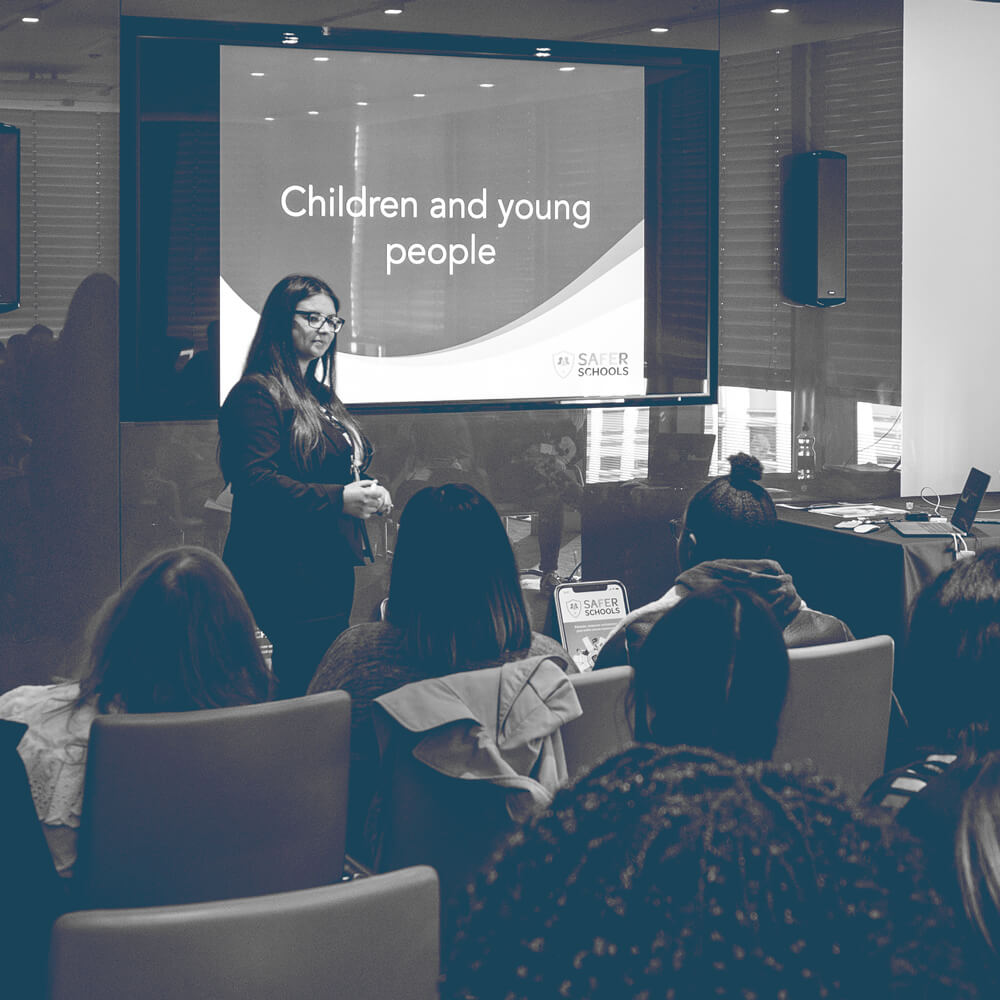
Online Safety Webinars

Invest in yourself today and develop your skills with our line-up of educational webinars.

When it comes to safeguarding children, standing still is falling behind.

Our specialist teams monitor safeguarding news and alerts in real time. They gather feedback from our partners on the issues they face and capture the lessons emerging from local, national and international reviews of safeguarding practice.

All of our course content is subject to a robust quality assurance process, overseen and informed by our in-house counsel (the former Head of Legal at CEOP) and an editorial panel comprising local authority, education and other safeguarding professionals.

Focusing on contemporary practical issues placed in the context of young peoples lives, the content of each course is designed to help you develop your existing skills and abilities as well as to provide you with a credible insight into emerging trends and themes. If you work with children, young people or vulnerable adults we have a course that will both challenge, educate and empower you.


“Multi-agency discussions of scenarios were really interesting – there’s still a lot of misunderstandings amongst professionals. It was useful to dispel some myths.”
Safeguarding Partnership Manager

“Best course I’ve been on for a long time… the chance to ask challenging questions and learn from your experience was unmatched in any other training I’ve attended.”

Head Teacher

“The training was fantastic. It is one of the best training sessions that I have attended. It was very informative and relates directly to my area of work.”

Social Worker

“I liked the way you integrated case studies and procedures from our local area. You also signposted us to local support so we know where to go for relevant information.”

Health Visitor

Safeguarding in Faith Communities

  • Responding to Those Who Pose Risk in Church Settings

    This course equips church officers to assess and manage risks posed by individuals, including those who have sexually harmed. Training covers implementing safety plans and emphasises the importance of communication, collaboration, monitoring procedures and enhancing knowledge of relevant policies for a safer church environment. 

  • Youth Ministry & the Digital World

    Youth ministry in the digital age demands online safety expertise. This course provides leaders with essential knowledge to tackle grooming, cyberbullying, and harmful content. Learn to build safe online spaces, develop vital policies, and use technology responsibly for effective ministry.

“Most people now live in a converged world; the context of their lives driven by offline and online experiences and influences.

The pace of change in this digital world means safeguarding professionals who stand still, rapidly fall behind.

Whilst internet enabled technology provides challenges it also offers opportunities to communicate, work and learn together.”

“Most people now live in a converged world; the context of their lives driven by offline and online experiences and influences.

“The pace of change in this digital world means safeguarding professionals who stand still, rapidly fall behind.

“Whilst internet enabled technology provides challenges it also offers opportunities to communicate, work and learn together.”

Jim Gamble QPM

Explore our Prospectus

Click or tap the buttons below to filter our range of CPD-certified courses.

  • Addiction in a Digital World

    The digital world is designed to capture attention—and keep it. In this course, we’ll explore how social media platforms, games, and streaming services are engineered to be engaging, and how this can lead to compulsive or unhealthy use among children and young people.

  • An Introduction to County Lines and Criminal Exploitation

    County lines is a form of criminal exploitation that affects young people across both urban and rural communities – and increasingly begins online. This course explores how the county lines model operates and how children are groomed, manipulated, and controlled through a mix of in-person and online tactics.

  • Appropriate Use of Social Media

    In a world where personal and professional lives are increasingly visible online, it’s essential that staff understand how to navigate social media safely and responsibly. This course explores the features of popular social platforms, the risks that come with a public digital presence, and real-world examples of when things go wrong.

  • Artificial Intelligence in Education: Understanding Risks and Opportunities

    As AI becomes an increasingly visible part of learning, digital culture, and everyday life, schools must balance its potential benefits with safeguarding, ethical, and data protection responsibilities.

    This course introduces educators to the responsible and effective use of Artificial Intelligence (AI) in schools.

  • Child on Child Abuse

    Abuse between children and young people can take many forms - physical, sexual, emotional, and increasingly, online. This course explores the complex dynamics of child-on-child abuse, including how environmental, social, and digital factors contribute to harmful behaviours.

  • Crisis Management & Emergency Planning

    This bespoke, scenario-based course helps organisations test their ability to respond effectively to major incidents that could impact the safety of children, young people, and staff. Delegates will build confidence in strategic crisis response, multi-agency working, and employing a safeguarding first approach to decision-making.

  • Designated Safeguarding Lead: Roles and Responsibilities

    As the key point of contact for safeguarding in your setting, the Designated Safeguarding Lead (DSL) plays a crucial role in protecting children and young people from harm. This course provides a deep dive into the responsibilities of the DSL, equipping you with the knowledge, skills, and confidence to lead safeguarding effectively.

  • Digital Footprint Training

    Young people’s online activity plays a key role in shaping their future opportunities. This session is designed to help students manage their digital footprint, ensuring that their online presence positively reflects who they are.

  • Exploited by Image: Grooming, Blackmail and Control

    Images and videos are increasingly used as tools to exploit, groom, and control young people. This course explores how imagery is weaponised through threats, blackmail, and coercion, in contexts such as sextortion, child on child abuse, gang exploitation, and county lines activity.

  • Female Genital Mutiliation (FGM) Awareness

    This training session provides participants with a clear understanding of Female Genital Mutilation (FGM) as a form of child abuse and gender-based violence. It explores the cultural, social, and psychological context surrounding the practice and equips professionals with the knowledge and confidence to identify, respond to, and safeguard those at risk.

  • Filtering and Monitoring for Schools

    As online risks continue to evolve, effective filtering and monitoring systems have become essential in maintaining a safe and supportive digital environment in schools and colleges.

    This course supports school leaders, safeguarding professionals, and IT staff to understand and apply national guidance, including the latest Keeping Children Safe in Education and the DfE’s Meeting digital and technology standards in schools and colleges.

  • Fostering in a Digital World

    Foster carers provide safety, stability, and emotional support that can be life-changing for children and young people in care. In today’s digital world, that care must also extend online, where the risks for looked-after children are often greater. Their lived experiences can increase vulnerability to manipulation, grooming, exposure to harmful content, and other online harms. This course offers practical insights into the digital behaviours of children in care, tools to build digital resilience, and clear guidance for safe, appropriate responses to online concerns.

  • Keeping Yourself Safe Online: Ages 13-18

    In today’s digital world, young people are exposed to a range of online risks. This session is designed to equip them with essential knowledge and practical skills to navigate the online world safely.

  • Keeping Yourself Safe Online: Ages 7-12

    In today’s digital world, young people are exposed to a range of online risks. This session is designed to equip them with essential knowledge and practical skills to navigate the online world safely.

  • Masculinity, Misogyny, Incels: A Safeguarding Insight

    In an era where online interactions have the power to shape real-world attitudes and behaviours, understanding the complexities of incel ideology, toxic masculinity, and misogynistic narratives is crucial.

  • Missing, Exploited, Trafficked (MET)

    Children who go missing, are exploited, or trafficked often experience overlapping and complex risks. This two-part course provides professionals with a detailed understanding of the indicators, vulnerabilities, and contexts that surround MET-related harm. Using real-world case examples and current safeguarding frameworks, participants will explore how exploitation can evolve, how children are targeted and controlled, and the critical importance of timely, informed responses.

  • Online Abuse of School Staff

    This course provides clear guidance for recognising, responding to, and managing online bullying behaviour targeted at school staff. You’ll explore how this behaviour impacts individuals and the wider school community, and gain practical strategies to help protect yourself, maintain professional boundaries, and support a safer learning environment.

  • Online Safety for Parents and Carers

    The session explores common online risks, including exposure to inappropriate content, contact from strangers, and challenges around screen time. Parents and carers will also be guided through practical tools such as safety settings, parental controls, and how to access platform-specific support to help protect their children online.

  • Online Safety for Staff

    This course explores the key online risks children and young people face today, including harmful content, contact, and conduct. School staff will be guided through current trends in online behaviour, including the use of social media and messaging apps, and how these can impact safeguarding concerns. We’ll unpack how a whole-school approach can embed online safety into everyday practice, aligned with inspection standards, curriculum guidance and safeguarding frameworks.

  • Pornography & Sexual Development

    Pornography is more accessible than ever, with young people increasingly exposed to explicit content online. This course examines the pornography of today, how access and content has changed, and the risks this poses to those in your care.

  • Recognising Abuse in Positions of Trust

    Individuals in positions of trust, such as those working in education, sport, faith, care, and community roles, hold significant influence over the individuals they support. This advanced course explores how some people abuse that trust to cause harm.

  • Responding to Those Who Pose Risk in Church Settings

    This course equips church officers to assess and manage risks posed by individuals, including those who have sexually harmed. Training covers implementing safety plans and emphasises the importance of communication, collaboration, monitoring procedures and enhancing knowledge of relevant policies for a safer church environment. 

  • Safeguarding & Risk Managment in Sports and Activity Settings

    This session equips coaches, activity leaders, and safeguarding leads with the knowledge and practical skills to carry out meaningful risk assessments that reflect the unique challenges of their environment.

  • Safeguarding Adults (Level 1)

    This course is designed for professionals working in health, social care, education, and community settings to provide them with a clear and accessible overview of adult safeguarding responsibilities.

  • Safeguarding Children and Young People (Level 1)

    This foundational course provides a clear and practical overview of safeguarding children and young people. Designed for anyone working or volunteering with children, it covers the essential information you need to recognise abuse and respond appropriately.