
Reading Time: 6.2 mins
20th February 2026
The Department for Education (DfE) has opened a consultation on proposed revisions to Keeping Children Safe in Education (KCSIE) 2026. This statutory guidance sets out the legal duties that schools and colleges must comply with to safeguard and promote the welfare of children.
Unlike minor annual updates, the 2026 draft represents one of the most significant structural shifts in safeguarding expectations in recent years. It integrates findings from the landmark Cass Review, addresses rapidly evolving technological risks, and formally transitions multiple pastoral issues into the statutory safeguarding domain.
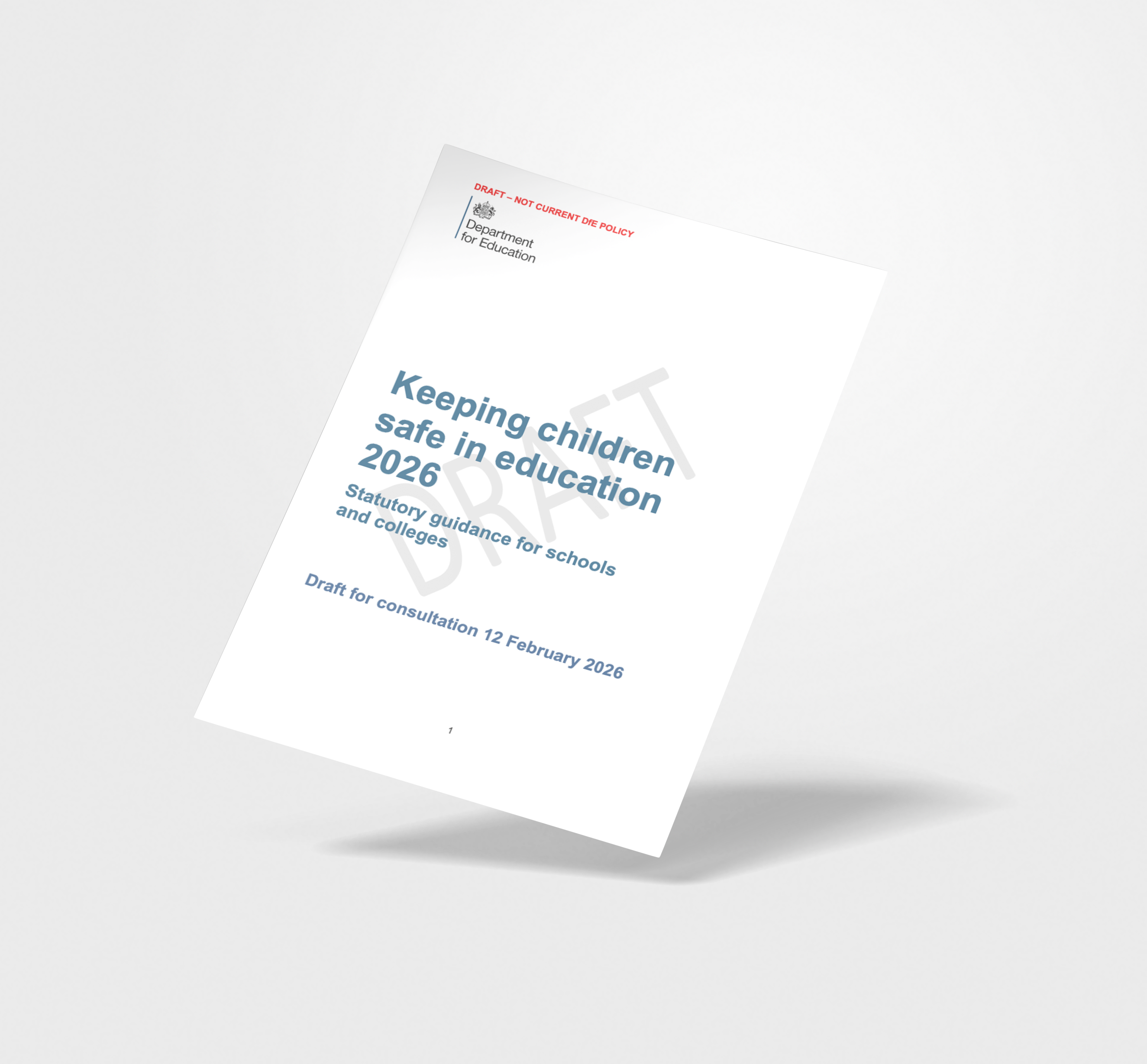
The consultation aims to engage all stakeholders responsible for child welfare in England, from frontline staff and Designated Safeguarding Leads (DSLs) and their deputies, to governing bodies and proprietors, ensuring the guidance is robust and practical for all practitioners.
It is important to note that the proposed revised guidance should be read in its entirety, and safeguarding professionals should not rely solely on this or other summaries or overviews.
Proposed revisions include:
1. Support for Gender-Questioning Children
Integrated directly from the Cass Review, these principles are now part of the statutory framework (Refer to KCSIE 2026 Draft, Part 2, pp. 65-71).
- An Informed Approach: ‘In making decisions about supporting social transitions, schools and colleges must comply with their distinct but interacting obligations under safeguarding legislation and equality and human rights law.’ This is to ensure an informed evaluation of welfare and interest (para 253).
- Parental Involvement: Involving parents is the default requirement in ‘the vast majority of cases’ unless a documented specific safeguarding risk exists. In these instances, the DSL should decide on the action to be taken to safeguard the child before any parental or carer contact or decisions are made (paras 260 – 262).
- Biological Sex Provision and Record Keeping: The draft guidance mandates no exceptions for the provision of single-sex facilities (toilets, changing rooms, showers and dormitories) based on biological sex (paras 110 & 114). Schools and colleges are legally required to record a child’s biological sex accurately in all records (para 273). Without compromising the provision of single-sex facilities, schools can explore whether and how alternative arrangements can be provided (paras 108, 114 & 194).
2. Technology, AI, and Cyber Security
- AI Deepfakes as Abuse: The definition of child-on-child abuse now explicitly includes AI-generated images and / or videos (including deepfakes) (refer to KCSIE 2026 Draft, Part 1, para 34).
- Mandatory Annual Reviews: Governing bodies and proprietors must now document a review of filtering and monitoring effectiveness at least once every academic year (refer to KCSIE 2026 Draft, page 47, para 166).
- Cyber Security Duty: Safeguarding records and child data are now core safeguarding concerns. Compromised data is viewed as an immediate risk to child wellbeing, shifting cybersecurity from an IT task to a core safeguarding responsibility (refer to KCSIE 2026 Draft, Part 2, para 170).
3. Mental Health and Serious Violence
- Mental Health as Safeguarding: All staff need to be aware that mental health problems could develop into a safeguarding concern. This could include, for example, self-harm, eating disorders, or suicidal ideation. If there is an immediate risk of danger, or if a child requires urgent non-emergency help for their mental health, staff should follow the appropriate referral pathways (refer to KCSIE 2026 Draft, Part 1, paras 44 and 47).
- The Intent Threshold: Staff are now expected to report any child expressing the intent to use or carry a weapon, lowering the threshold to allow for earlier DSL intervention and de-escalation (refer to KCSIE 2026 Draft, Part 1, para 48).
Further Notable Revisions
The 2026 draft introduces several other technical and operational updates that carry significant strategic weight:
Strategic Implementation Roadmap
Reviewing the consultation requires looking beyond individual clauses to the broader operational impact. The DfE is specifically seeking on the ground feedback on the new sections. While the guidance is currently in draft form, safeguarding professionals and educational leaders should take proactive steps to help shape the final version and prepare for a September 1st implementation.
Join our Online Safeguarding Hub Newsletter Network
Members of our network receive weekly updates on the trends, risks and threats to children and young people online.